

How to Clear a Safe Zone Around Your Kitchen
A safe zone around the kitchen is not one fixed number that applies to every home. It is a clear, organised space where heat sources, flammable items, electrical cords, people and exit routes do not interfere with one another. Before cooking, check three areas: the heat zone, the storage and preparation zone, and the movement zone.
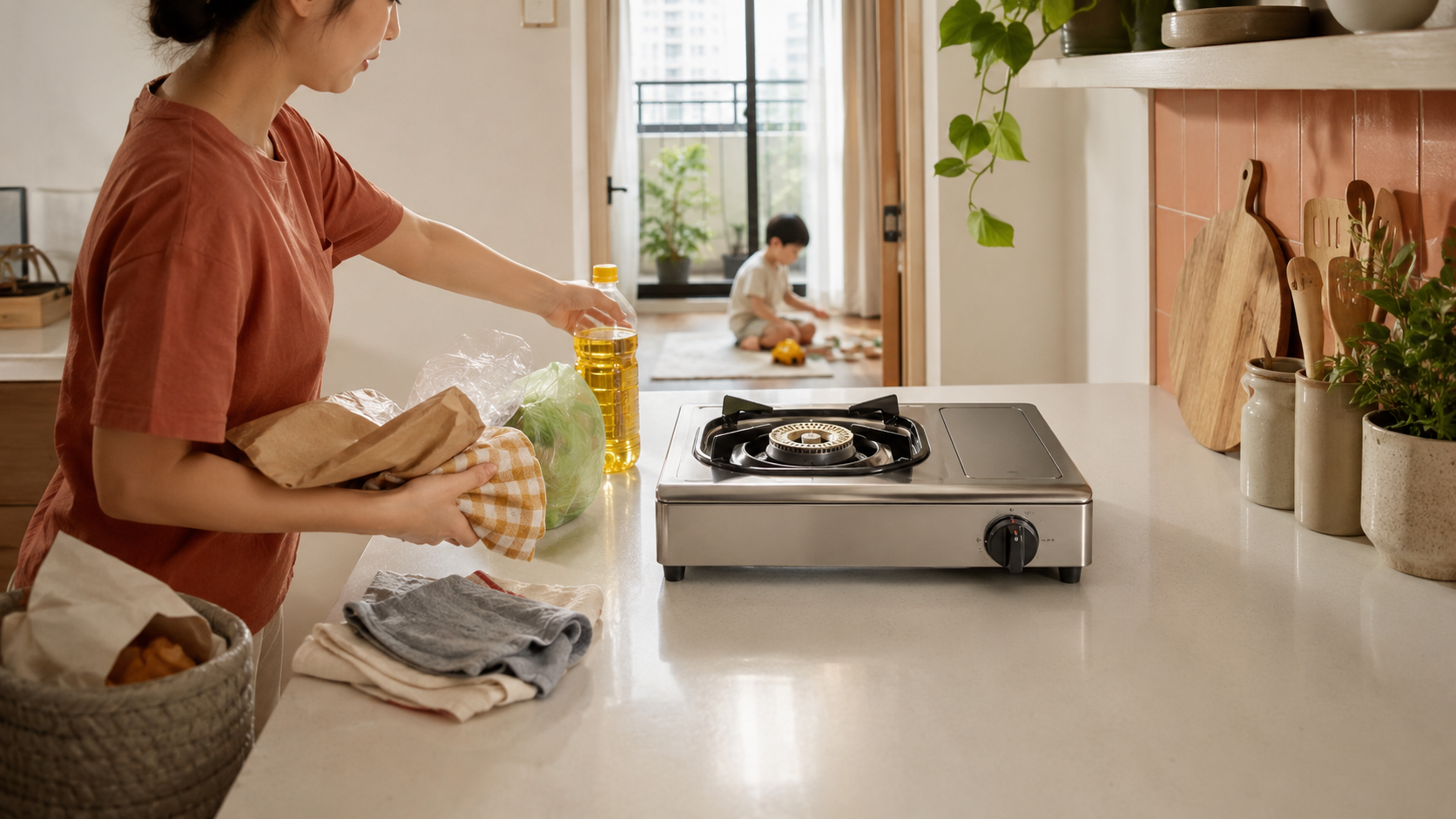
What is a safe zone around the kitchen?
A safe zone around the kitchen is an area kept clear, stable and easy to observe so the cook can control heat, fuel, electricity and movement. This is a practical framework proposed by Cookmate; it is not the name of a technical standard or a mandatory distance.
The appropriate clearance depends on the appliance, fuel, countertop, ventilation and the manufacturer’s instructions. Do not assume that one distance fits every kitchen. The purpose of clearing the area is to remove obstacles and flammable items while keeping the appliance within its intended conditions of use.
1. Clear the heat zone before turning on the appliance
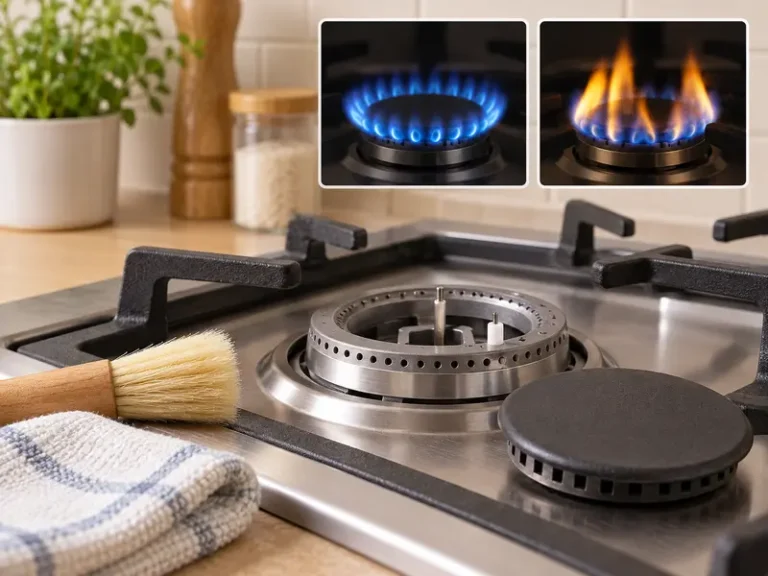
Clear the heat zone before the appliance operates. Towels, paper, packaging, plastic bags, wooden items and loose clothing can ignite when they are too close to a heat source. The U.S. Fire Administration (USFA) also advises keeping items that can burn away from cooking areas.
- Move dish towels, paper towels, food containers, plastic bags and curtains away from the cooking area.
- Do not place oil bottles, aerosol cans or flammable materials next to burners or hot surfaces.
- Keep wooden utensils, oven mitts and dry towels within reach, but outside the hot zone.
- If the appliance is lit or hot, do not reach across the flame to tidy up. Turn it off only when this can be done safely, then wait for it to cool.
Clearing the heat zone does not mean placing everything as far away as possible. Start by reading the appliance instructions, then remove anything that could unexpectedly become hot, spill, be pulled or catch fire.
2. Separate kitchen items into three visible zones
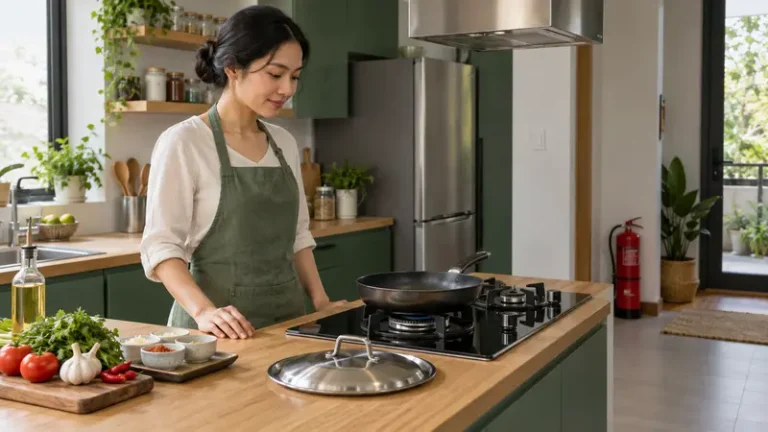
The easiest arrangement to maintain is to separate items into a ready-to-use zone, a preparation zone and a storage zone. This reduces the need to reach across the cooking area or place objects temporarily on a hot surface.
Ready-to-use zone
Keep only the pot, pan and utensils needed for the dish being prepared. Pot handles should face inward, away from the edge of the counter and from walkways. This is consistent with USFA’s educational guidance to reduce the chance of a bump tipping a pot; always follow the design and instructions of the specific appliance.
Preparation zone
Place the chopping board, ingredients and unused utensils on a stable surface that does not block controls, cords or exits. If there is no separate counter, prepare ingredients before turning on the appliance instead of moving items across a hot zone while cooking.
Storage zone
Store paper, plastic bags, towels, cardboard boxes and other burnable materials in a dry, organised place away from heat. With a gas appliance, do not place a cylinder or gas canister inside an enclosed compartment unless the appliance instructions explicitly allow it.
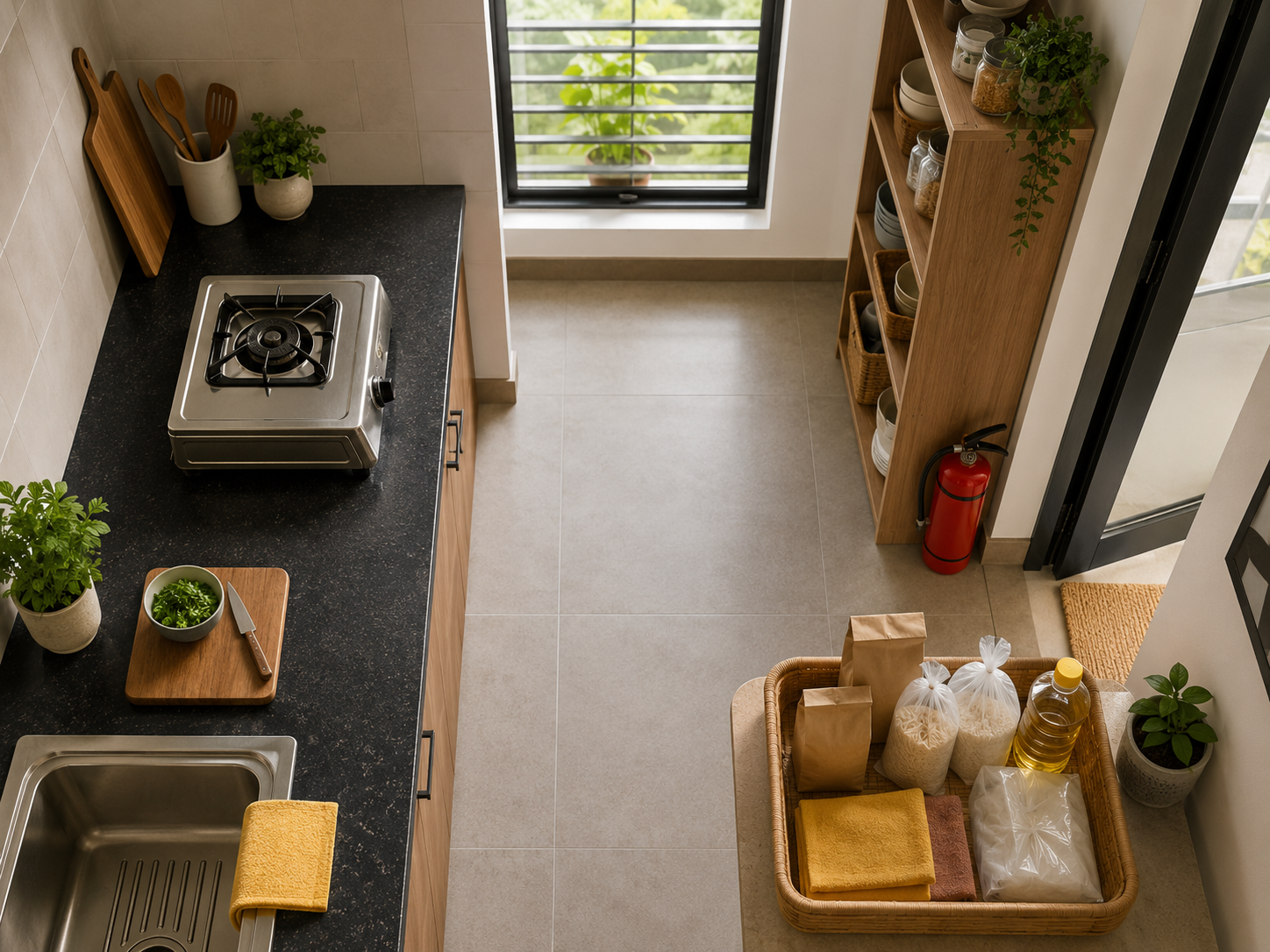
3. Keep gas and electrical areas from overlapping
Fuel and electrical areas should be checked separately. A small issue in either area can lead to rushed actions or introduce an ignition source.
For gas appliances
According to the Vietnam Fire Prevention, Firefighting and Rescue Police, household LPG cylinders should be kept upright and should not be installed in an enclosed room or basement. Keep the valve, hose and connections visible; never test for a leak with a flame, and do not repair gas components without the necessary expertise.
If you smell gas or hear a hissing sound, do not switch electrical equipment or light sources on or off in the suspected area. Leave by a safe route, warn others and contact qualified emergency support. You can also read Cookmate’s guide to common fire sources around the kitchen to distinguish preventive tidying from emergency response.
For electrical appliances
Keep electrical cords away from hot areas, sharp edges and places that are frequently wet. If a plug is loose, a socket is discoloured, there is a burning smell, sparking or unusual heat, stop using it and ask a qualified person to inspect it. USFA advises plugging electric cooking appliances directly into a suitable wall outlet rather than using an extension cord; actual electrical conditions must still follow the manufacturer’s instructions and the home’s electrical system.
4. Clear walkways and create a child-safe viewing area
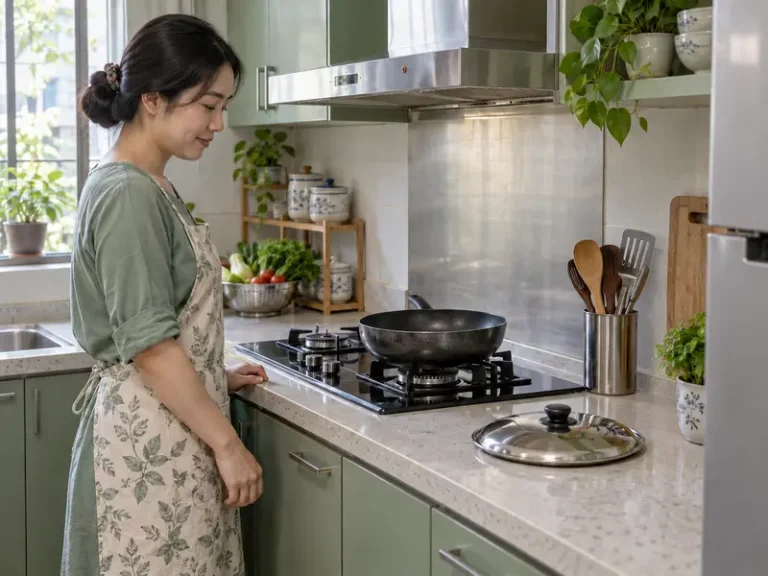
A tidy kitchen is not enough if the cook has to step over boxes, cords or chairs to reach an item. Keep the route to the door and the working area clear of shopping bags, cardboard boxes, carts and temporarily stored objects.
- Keep young children and pets outside the active cooking area. Do not carry a child while holding a hot liquid or while standing close to the appliance.
- Do not leave charging cables, long towels or bag straps across walkways.
- Check that the door, hallway and exit route can be reached if you need to leave the area.
USFA educational material uses a three-foot zone around a stove and grill as a reference point for keeping children away from cooking areas. This is U.S. safety education, not a universal legal distance for every Vietnamese kitchen. For real-world placement, prioritise the manufacturer’s instructions, the layout of the property and local professional requirements.
5. For camping kitchens, clear the area for the outdoor setting
A camping kitchen needs a stable surface, open ventilation and enough space for people to move without pulling the appliance over. Do not bring a stove, lantern or open flame into a tent. The U.S. Consumer Product Safety Commission (CPSC) advises keeping stoves and campfires away from tents and not refuelling inside an enclosed room or tent.
Before cooking, clear dry leaves, paper, rubbish bags, fabric and other flammable items from the area. Check fuel connections according to the appliance instructions. Do not refuel while the appliance is hot or burning. Campground rules and the product instructions always take priority.
Safe-zone checklist before cooking
A short, ordered check is more useful than extensive tidying without a clear sequence. Ask these six questions:
- Has the hot zone been cleared of paper, plastic, towels, packaging and other flammable items?
- Are the pot, pan and appliance on a stable surface and positioned according to the instructions?
- Do the valve, hose, connections, plug and electrical outlet show any unusual signs?
- Can you reach the required utensils without reaching across a flame or hot surface?
- Are the walkways blocked by objects, cords, children or pets?
- Are the door and route away from the cooking area clear?
When should you stop tidying and leave the area?
If there is a gas smell, hissing, smoke, a burning odour, sparking, an unusually hot outlet, a deformed component or an abnormal flame, stop tidying and move away from the danger. Do not turn the appliance back on, create a spark or attempt repairs without the necessary expertise. If there is a fire or explosion risk, leave the area, warn others and call Vietnam’s fire and rescue emergency number, 114, from a safe location.
A 10 February 2026 recommendation from the Vietnam Fire Prevention, Firefighting and Rescue Police again emphasises keeping flammable materials away from flames and heat sources and checking household equipment proactively. This is a preventive principle, not a promise that a kitchen will be completely safe.
Cookmate sees peace of mind in the small decisions
Under Cookmate’s positioning, “Peace of mind for every Vietnamese kitchen”, equipment is only one part of a safe experience. Choosing, arranging, using and maintaining equipment must work together. That is why Cookmate develops safety education content to give users a practical basis for checking their kitchen before cooking.
From a design and brand perspective, a trustworthy kitchen is not created by attractive visuals or a big advertising promise. It is built through decisions that fit real needs and real limits of use.
Start by standing one step away from the appliance and looking across the heat zone, the storage and preparation zone, and the walkway. If you notice an unusual condition, follow the manufacturer’s instructions or contact a qualified professional before cooking again. You can also explore Cookmate’s kitchen-equipment safety framework or Cookmate equipment solutions for different use contexts.
References
- Vietnam Fire Prevention, Firefighting and Rescue Police — Fire-safety measures for household gas use (28 July 2022; link checked 28 August 2026).
- Vietnam Fire Prevention, Firefighting and Rescue Police — Preventing fire and explosion risks during Tet and early-year festivals in 2026 (10 February 2026; checked 28 August 2026).
- U.S. Fire Administration — Cooking Fire Safety (international supplementary source; checked 28 August 2026).
- U.S. Fire Administration — Cooking Fire Safety Pictographs (international supplementary source; checked 28 August 2026).
- U.S. Consumer Product Safety Commission — Camping Hazards (supplementary source for camping contexts; checked 28 August 2026).
This information is provided for education and prevention. Regulations, product instructions and building conditions may differ; check the original sources before applying any recommendation.