


A gas stove flame is not simply a matter of whether it “looks good”. Its colour, stability and the traces around the burner can tell you when to stop, inspect the appliance or call a qualified professional. However, flame colour alone should never be treated as a definitive diagnosis of a stove’s condition.
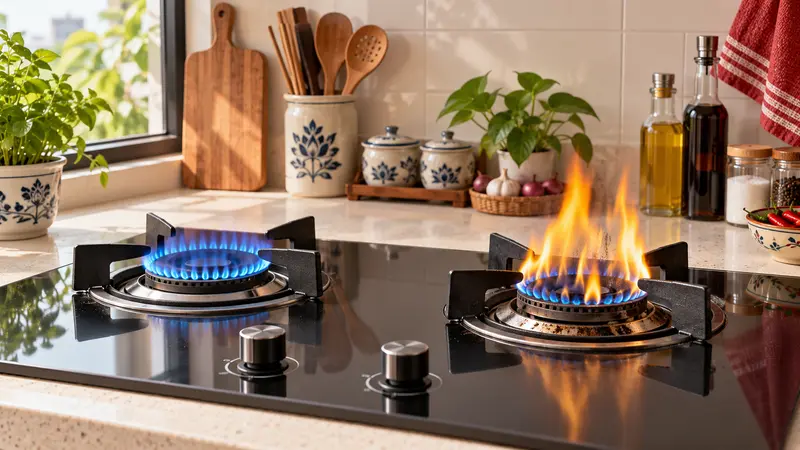
In a household kitchen, people see the flame every day but rarely observe it deliberately. A small change—such as a yellow flame, uneven combustion, an unusual sound or repeated extinguishing—may be ignored because the stove still appears usable. A safer approach is to treat the change as a signal to inspect the appliance rather than continuing to use it out of habit.
What does a normal gas stove flame look like?
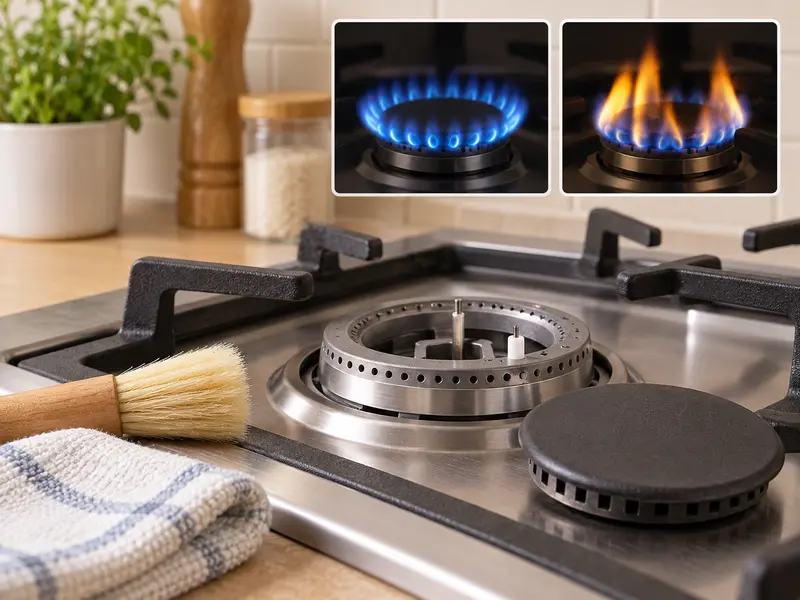
For many domestic gas appliances, the flame is usually relatively stable, blue and evenly distributed around the burner ports. The UK Health and Safety Executive (HSE) uses a stable blue flame as a reference sign of normal operation. In contrast, yellow or orange flames, soot and a pilot light that frequently goes out are signs that require attention.
This does not mean that every yellow or orange flame immediately proves that a stove is defective. Flame colour can be affected by dirt, spilled food, a misaligned burner cap or the surrounding air conditions. The important question is whether the flame change persists, combustion is unstable or other warning signs appear at the same time.
5 signs of an abnormal gas stove flame
1. A persistent yellow or orange flame
If the flame repeatedly turns yellow or orange instead of remaining relatively blue and stable, turn off the stove and let the appliance cool before checking it according to the manufacturer’s instructions. The HSE identifies yellow or orange flames, together with soot or staining, as possible signs of incomplete combustion and a potential carbon monoxide (CO) risk.
Do not put your face close to the burner to “smell” it or keep relighting the stove to test it. If the flame does not return to normal after the burner has been cleaned, dried and correctly reassembled according to the instructions, stop using the appliance and ask a qualified technician to inspect it.
2. An uneven, flickering flame or a flame lifting away from the burner
A flame that moves violently, burns on only part of the burner ring, makes an unusual popping sound or appears to lift away from the burner should not be dismissed. A simple cause may be blocked burner ports or a misaligned burner cap. The issue may also involve gas supply, the ignition system or ventilation conditions.
Do not drill, enlarge the injector openings or adjust gas-supply components yourself. These actions can change the appliance’s original design and create additional risks.
3. A flame that repeatedly goes out or is difficult to maintain
A flame that goes out once because of a draught or a spill is not enough to establish the cause. But if the stove cannot hold a flame, the pilot light frequently goes out or the flame repeatedly disappears soon after ignition, stop using the appliance and check the instructions for the exact model. The HSE advises against using a gas appliance if you believe it is not operating correctly.
4. Soot, scorching or yellow-brown staining around the stove
Black soot beneath a pan, yellow-brown staining around the appliance or unusual scorch marks should not be dealt with simply by wiping them away. Treat them as signs that require investigation: the burner may be dirty, the pan may be misaligned, combustion may be incomplete, ventilation may be obstructed or the appliance may need servicing.
Take a photograph of the sign, note when it appeared and contact the supplier or a qualified technician. Recording the evidence helps prevent the mark from being wiped away and the appliance returned to normal use without identifying the cause.
5. A gas smell, smoke or unusual physical symptoms
A gas smell is a separate emergency; do not wait until you can see a flame. If you suspect a gas leak, tell everyone to leave the area, avoid creating flames, do not switch electrical devices on or off and do not use a phone inside the suspected gas area. Once you are in a safe location, contact the gas supplier or call Vietnam’s fire and rescue emergency number, 114.
Carbon monoxide is colourless and odourless, and it can be produced when fuel burns incompletely. Headache, dizziness, nausea, unusual tiredness or difficulty breathing while a fuel-burning appliance is in use should be treated as a medical emergency: leave the area and seek medical help immediately.
Visit Cookmate’s Safety Education section for practical guidance on observing, checking and using kitchen equipment more safely.
What should you do when you notice an abnormal flame?
- Turn off the burner control. If it can be done safely, close the gas valve according to the appliance instructions.
- Let the stove cool completely. Do not remove the burner parts while they are hot and do not pour water onto a hot appliance.
- Check the visible components. See whether the burner cap is correctly positioned; remove spilled food and clean and dry the parts according to the manufacturer’s instructions.
- Do not repair the gas system yourself. Do not alter injectors, valves, hoses or burner ports without the necessary expertise.
- Test only under controlled conditions or call a technician. If the warning sign returns, stop using the appliance and ask a qualified professional to inspect it.
How to distinguish simple cleaning from a problem that needs professional help
Cleaning the burner is something a user may be able to do when the appliance manual permits it: turn off the stove, close the gas valve when necessary, wait for the appliance to cool, remove only the approved parts, clean them and let them dry completely before reinstalling them. This is a basic check, not a replacement for gas-appliance servicing.
Stop self-checking and call a qualified technician when the flame remains yellow or orange or continues to flicker; the appliance makes an unusual sound; there is soot, a gas smell or scorching; the flame goes out repeatedly; or you are unsure whether you have removed and reinstalled the parts correctly. Do not use an appliance that you know or suspect is unsafe.
Cookmate’s perspective: observation is the first layer of safety
Reliable kitchen equipment needs to be part of a safe-use system: appropriate installation, adequate ventilation, clean burners, users who recognise warning signs and a clear procedure for stopping use. No single flame colour can replace inspection according to the manufacturer’s instructions, proper maintenance and responsible incident response.
Cookmate’s direction is “Peace of mind for every Vietnamese kitchen”, supported by practical knowledge that people can check and apply. If you need to review your equipment or usage context, start with Cookmate’s company information and choose an appropriate consultation path instead of looking only at the initial purchase price.
Sources
- Vietnam Fire Prevention and Rescue Police Department — Gas-use fire-safety measures for households.
- Health and Safety Executive — Gas appliances: Get them checked, keep them safe.
- Health and Safety Executive — Gas safety: Carbon monoxide awareness.
- Gas Safe Register — Check your gas appliances (additional international reference).
Note: This article is for general educational purposes. It does not replace the appliance manufacturer’s instructions, current fire-safety regulations or an inspection by a qualified technician. No guidance can guarantee absolute safety in every situation.