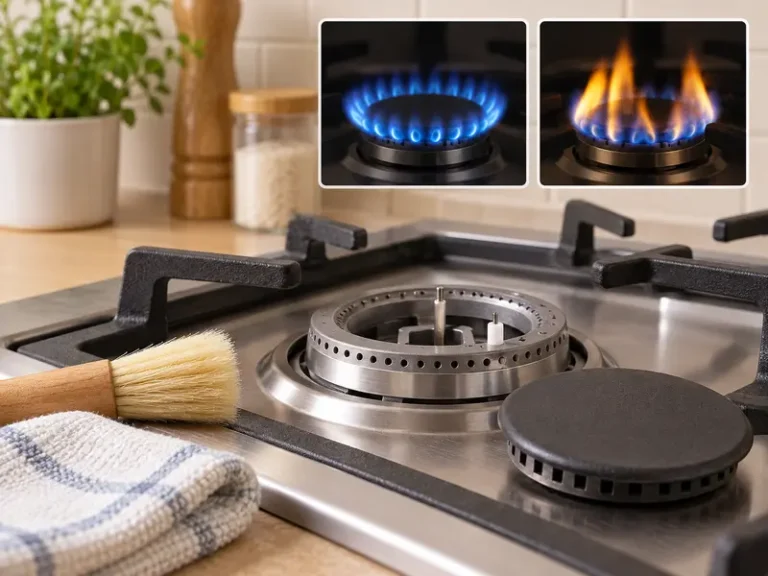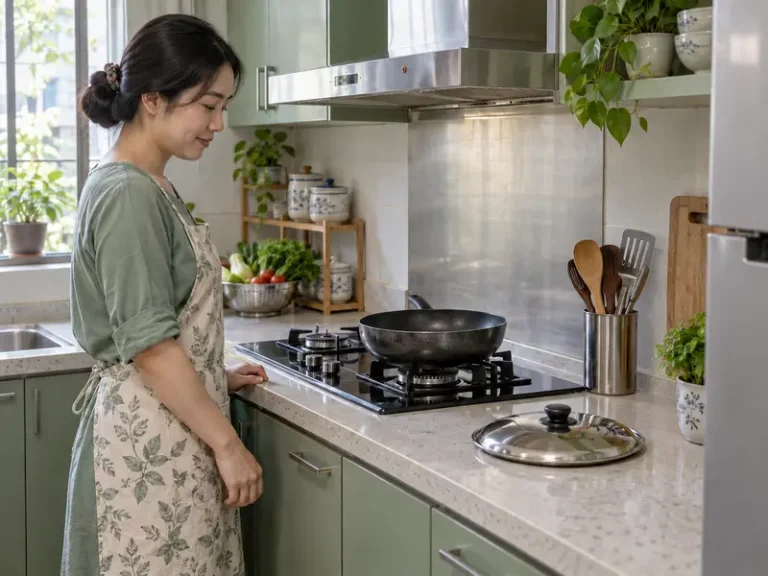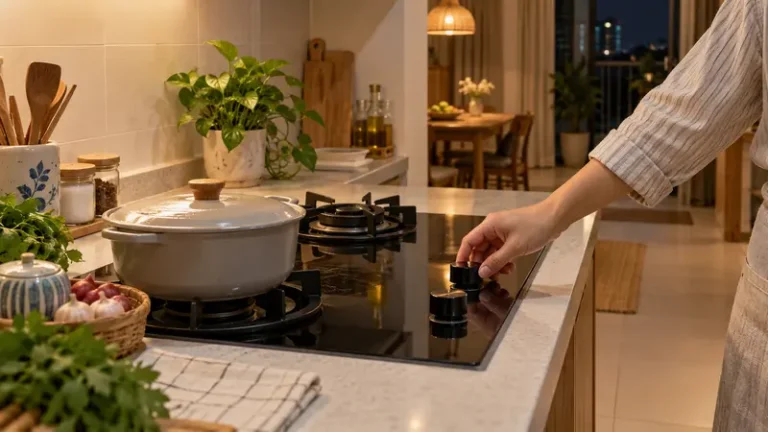


Prepare a Pan Lid and Fire-Safety Tools Before Cooking
Before frying or cooking with oil, place a lid that fits the pan within easy reach, keep the stovetop clear, and make sure the exit route is unobstructed. A fire extinguisher is only a backup when it is the right type, serviceable, and the user has been trained; if you are unsure, leave and call 114.
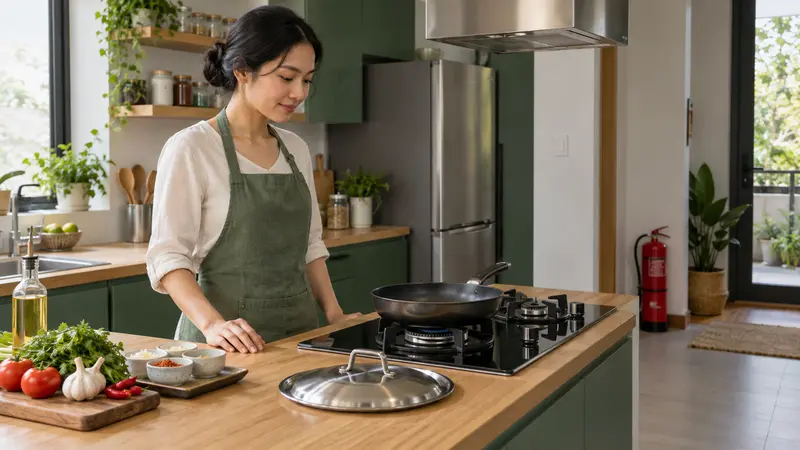
Why prepare before turning on the stove?
When oil starts smoking or a pan catches fire, there may be very little time to think or look for equipment. Preparation is not an invitation to fight every fire yourself. The goal is to reduce rushed actions such as searching for a lid, carrying a hot pan, or reaching for water.
The U.S. Fire Administration (USFA) recommends keeping a pan lid or baking sheet nearby when cooking. NFPA also advises keeping a lid close when cooking with oil and sliding it over the pan only when the fire is small and it is safe to do so.
A 60-second checklist before frying
- Choose a lid that fits the pan. The lid should cover the pan opening and have a secure handle. Place it steadily on a flat surface, away from heat and splashing oil, but close enough to reach without stepping across the heat source.
- Clear the stovetop. Move towels, paper, food packaging, wooden utensils, and other combustible items away from the cooking area. Turn pan handles inward to reduce the risk of bumping them.
- Keep the controls visible. Do not let objects block the stove controls. If oil starts smoking or smells excessively hot, turn off the heat early when it can be done safely.
- Keep the exit route clear. Do not place chairs, boxes, or electrical cords in the path out of the kitchen. Keep your phone somewhere you can take it while evacuating, not next to the stovetop.
- Check fire-safety equipment. The fire extinguisher must be suitable for the expected fire type, easy to reach, undamaged, and maintained according to its instructions. Users should know how to operate it before an emergency occurs.
Every tool has a role—and limits
| Tool | What is it for? | Important limit |
|---|---|---|
| Fitting pan lid | Covering the pan to limit the oxygen feeding a small grease fire. | Do not approach if the fire has spread, smoke is thick, or the retreat path is no longer clear. |
| Flat baking sheet | Potentially covering a pan when it seals the opening, remains stable, and can be placed safely. | Do not use combustible material or a tool that is too small and forces your hands close to the flames. |
| Portable fire extinguisher | A backup for the fire types listed on its label. | No single extinguisher is suitable for every situation. Consider using one only after raising the alarm, when the fire is small and contained, smoke is not threatening you, a clear exit is available, and you have been trained. |
| Smoke alarm | Providing early warning so people in the home can respond and escape. | It is not a fire-suppression tool; test and maintain it according to the device instructions. |
| Phone and 114 | Calling the Fire Prevention, Fighting and Rescue Police from a safe location. | Do not delay evacuation to retrieve a phone or belongings. |

If the oil smokes or the pan catches fire, what should you do first?
When the oil is showing signs of overheating
If you see light smoke or smell oil becoming excessively hot, turn off the heat when you can do so safely. Do not wait for flames to appear before reacting.
When the fire is small and remains inside the pan
If you can approach without moving through flames or thick smoke, slide the lid over the pan, turn off the heat, and leave the lid in place until the pan has cooled completely. Do not carry the pan elsewhere and do not lift the lid early to check it. For more on staying focused while cooking and knowing when to stop, read Why You Should Never Look Away While Cooking.
When you are no longer sure it is safe
If the fire spreads beyond the pan, smoke becomes thick, you cannot turn off the heat safely, or the exit route is threatened, alert everyone, leave the area, close the door behind you if you can do so immediately while escaping, and call 114 from outside. The USFA stresses that a fire extinguisher should be used only when the fire is small, the user can operate it, smoke is not threatening, and a clear escape route is available.
How should a fire extinguisher be positioned without creating another risk?
Cookmate recommends choosing a visible, accessible position along the route out of the kitchen—not directly above or immediately beside the stove. The exact position, extinguisher type, and inspection schedule must follow the equipment label, manufacturer instructions, and fire-safety requirements appropriate to the home.
The Vietnam Fire Prevention, Fighting and Rescue Police advises households to prepare fire-safety equipment, keep exits clear, and call 114 in the event of a fire. For homes combined with business use, equipment requirements also depend on the building’s scale and function; one universal checklist should not be applied to every property.
Notes for apartments, rented rooms, and camping trips
- Small apartments: Do not keep the lid in a low cabinet behind the cook or in a place that requires walking around the stove to reach it.
- Rented rooms: Exit routes are often narrow; clear the path and do not stack belongings next to the stove before cooking.
- Camping: Never use a fuel-burning stove inside a tent or enclosed space. Follow the equipment instructions and site rules; wind, ground conditions, and nearby materials can change what a safe setup requires.
Three frequently asked questions
Does the lid have to be made of metal?
USFA and NFPA focus on using a pan lid or baking sheet that can cover the pan; they do not prescribe one material for every tool. Use a lid that fits, remains stable, is non-combustible, and is suitable for the cookware according to the manufacturer’s instructions. Do not assume that every lid is safe to use when flames are present.
Should a fire extinguisher be placed right next to the stove?
It should not be placed where heat, flames, or smoke could block access. A visible position along the escape route is often more practical, but always follow the extinguisher instructions and the fire-safety requirements for your home.
Can I use a fire extinguisher if I have never practised?
Do not wait until a fire starts to read the instructions. USFA recommends training in advance and using an extinguisher only when all safety conditions are met. If you are unsure about the extinguisher type or how to use it, evacuate and call 114.
References
- Vietnam Fire Prevention, Fighting and Rescue Police: household fire-safety guidance and calling 114 — checked September 16, 2026.
- USFA: Cooking Fire Safety — checked September 16, 2026.
- USFA: Choosing and Using Fire Extinguishers — checked September 16, 2026.
- CPSC: Recipe for Safer Cooking — checked September 16, 2026.
- NFPA: Safety with Cooking Equipment — checked September 16, 2026.
Before your next cooking session, take 60 seconds to check the lid, stovetop, fire-safety equipment, and exit route. Explore more kitchen safety guidance from Cookmate, visit the Cookmate homepage, or find equipment suited to your needs.